Blog
 So, my flight to Hong Kong got cancelled. That sucks, but there have been a few benefits.
Firstly, I got an overnight stay and full meals in the Rydges World Square in the centre of Sydney which led to a stroll through Hyde park while waiting for my rescheduled flight 24hrs later. That led me to an interesting conversation with a busker. A conversation that has been coming up for me lately so I though I’d share it with you. I noticed that although he was a wonderful guitarist and singer many people were walking right by him with out even such as a smile or acknowledgement. I sat down on the kerb for about 15 mins thoroughly enjoying his music and watching the reactions of various passers by. Many were virtually oblivious to him and others stayed and listened, others danced with their children and a few stopped to chat and lob a few dollars into his guitar case. When he was finished his set he came over and we started chatting. I asked him how he feels when some pass by without acknowledging him. He described it like this. “What I do is like a gift. Playing music is like offering anyone who wants to listen a gift. Whether they choose to take that gift and let the music into their soul, or simply let the sound pass them by in the wind is up to them. I doesn’t affect how I feel about playing unless I choose to. For example, if someone walks past and ignores me I choose not to allow their gifts of anxiety, stress or indifference into my space. I simple let them move through the air and dissipate. However, if someone comes up and talks with me and tells me how much they have enjoyed my songs, I take their gift of gratitude. If another is dancing, I take their gift of joy. I allow that to energise me. What energy I choose to allow as a gift is up to me” We talked for a while. He was a pretty interesting dude. I thanked him for his gifts, and went along with my walk. The conversation I had with my son earlier in the week came straight to mind as another way of looking at gifts was my way of helping him manage a rough patch at school. He was talking to me about some comments another student had made to him. He felt embarrassed, and offended. I started the conversation by handing him the only thing I had close by - a tube of hand cream. He took it. I explained that even though I had offered him the gift of hand cream, he was not obliged to take it. He could choose to say “Thank you, but no thank you” The comments or remarks of another is like being given verbal hand cream. You can choose to take those words, put them into your pocket and hold them close. You can rub them on your body and feel the words as they soak into your skin. Or you can not - You can choose to in your mind say “Thank you, but no thank you” and let the words float into the air and away. You are not obliged to take the gift. They can keep their gift of those words. That doesn’t mean that you need to be angry at them, but rather be compassionate in knowing that they more than likely put in their pocket gifts of negative words from another. They have not yet learnt how to say “No thank you”. I said to my son, that when you are content with who you are inside and know that you are worthy, loved and enough you have the strength to choose your own gifts. Gifts that you can receive and those that you give to others. There is power in that. I see this in coaching and riding too. I see my coaching as a gift (not in the arrogant, special kind of way, but metaphorical). I am offering something of myself to another to help them grow. That is all I can do. I can’t make them take it. To another, sometimes my gifts may look like hard work, something that is difficult or challenging. There are times when I will do this to provoke them to question what they truly believe and help them find the strength and resilience that they don’t yet know they have. If a rider chooses not to put that into their pocket, it is totally OK. I am not offended or disappointed. Everything is their choice, much like everything I do is my choice. But when a rider chooses to take those gifts and let into their skin, they then have an opportunity to be much more than they though they could. They have an opportunity of taking the gifts of grit, courage and opportunity. They can then share that with others if they so choose. We are surrounded by offers of gifts. Be very specific on what ones you choose to take and those that you are happy to say Thank you but, No, Thank you to. Choose only the gifts that will serve you and ultimately help you to grow and flourish. Be grateful for all of them, even the ones you choose not to take, as they show you how you sense of self is boundless. I can only hope that you see this, as a gift of curiosity and compassion. No problem for me if you choose not to see it that way and let the words pass you by. Your choice. I'm cool with that Lots of love...
0 Comments
Sleep. Oh, how I love the feeling after a hard days work and falling into bed exhausted.
I must say, I am lucky that as a rule sleep is not something that eludes me. The middle of the night is often my creating time. I have found that the skill required to manage my thoughts during sleep have become hugely beneficial during the day. When I am needing to focus on one specific outcome, I am able to adjust what is happening in my mind so that only thoughts related to what I am currently doing come to mind. I am able to do this because I practice at night, and have become quite effective at it. It didn’t always happen that way. I was a classic over thinker, and often in the middle of the night I was blindsided by emotions (which are only responses to thoughts), and worries. Thankfully, I have since learnt a few tricks which I would like to share with you. Being able to manage our thoughts takes practice, it is like any other muscle and why not build that muscle while sleeping. You may have experienced yourself that feeling of waking up at 3am in a state of panic after a bad dream, beginning the looping patterns of replaying past events, or worrying about an event in the near future. What if you were able to change the thoughts replaying in your mind to ones that will serve you AND do it easily? The best part of this process is that once you change your thoughts to resourceful ones sleep comes naturally and easily afterward. The biggest thing to tell yourself is that thinking these thought in a negative frame over and over again are not serving you or your outcome. Lacking sleep won’t help either so the best thing you can do to help you get out of the perceived challenge is to try on a few new options. Notice the thoughts that are replying over and over. Look at them in 3rd person as though you are looking through another set of eyes mind reading your thoughts. The act of seeing them simply as thoughts, much like those bubbles that pop up in cartoons allows you to mentally detach giving them less power over you. Then you have an opportunity to decide if they are ones you would like to keep, or would they be better off let go by. Many of our worries are not true, have never been true and will not come true. They are just made up jumble in our minds with bits and pieces of all sorts of past and perceived experiences. When we see them in 3rd person as such, we can just smile at them and say goodbye. Play with the image of the thought. This is one of my personal favourites, and hugely effective with children. When you notice a thought and decide you would rather not replay it over and over in your head, change a few things you notice about the image you are visualising as you think about it. First notice the colour, how far away the image is, are you in the image, or looking through your own eyes? Are the colour vivid and bright, or dull. Is it a moving image or still? Then play with changing that image. Change the colours. Move the image further away. Add in random objects. For example you find yourself thinking about an uncomfortable conversation with somone. Practice seeing it in your favourite colour, have a road runner scoot through the scene, or see Elvis dancing. Imagine it several times until you can can play the scene backwards and forwards quickly and easily with the added objects etc. It sounds a bit nuts but works incredibly well if you are willing to give it a red hot go Next time it comes up in a dream, add you chosen objects and be amazed by the power you have in your unconscious thoughts. An example of this for children is when my daughter had nightmares of a karate kangaroo coming to get her. This may not seem scary to us as adults but it was very real and terrifying to her at the time. We decided to change the dream and add a few images to it. First, we gave the kangaroo a big fluffy scarf with a pink flowery hat, a fat tummy and boxing gloves with laces that kept tripping him up. Then we added a conversation where Charlotte asked the kangaroo if her can teach her some karate. We practiced this by having Charlotte imagine the dream just before bed, and really describe everything she was feeling. To a point where she was feeling scared. Then we changed the image to the one we had come up with and noticed how her emotional state changed. We practiced this a few times to where she could change her emotional state at will simply by changing the image. Charlotte never had any trouble with the karate kangaroo after that. When the dream came, even while still sleeping she could change the image to where she was being taught karate by the kangaroo and then fell back into a restful sleep. I have done this with many children who were having trouble with nightmares and changed the images of many scary creatures leading to much happier and brighter children. This is such a wonderful skill to develop in a child. In order to change the image the children need to accept that they CAN change the thoughts and images coming from their minds. Knowing this gives them so much power. They are able to decide what they are going to focus, and how that are going to feel when perceived negative experiences come up through the day. Gratitude. It doesn’t matter what proverb or great thinker you look into or how far back you go in history, gratitude is something that is highly prized and practiced amongst the most successful people in the world. Such a simple subtle shift can change everything. Begin by thinking about what you currently have that you are grateful for. The more emotion you can bring to this the better. Take some time to fully experience this gratitude. It actually takes practice to experience gratitude fully Instead of thinking of what you are lacking, think about what you want instead. Fully imagine yourself having what you need. This is sleep time, where you can create anything you want. One of my favourite things to do is as I put my head on the pillow is to create tomorrow as “my perfect day”. Some days I go crazy and imagine things far beyond my wildest dreams all happening on one day, and other nights I am a bit more realistic and imagine everything I am wanting to achieve all going to plan, and then there ones in between. Rarely, do I get to the end of the day. I am usually happily sound asleep by mid morning in my imagined day. Place your thoughts into a metaphoric old string bag beside the bed. If you are feeling like you don’t want to get rid of your problems but really need to sleep, you can imagine putting your troubles into a string bag beside the bed to pick up again in the morning. Tell yourself that you will pick up your troubles in the morning and go forward and solve them tomorrow. Ask for guidance. This may come across as a little spiritual, but whether you believe in a god, a higher self, a buddha or nothing it is a great opportunity to ask your unconscious to look for answers to your frustration overnight. Say aloud, ( or in you mind if you don’t feel conformable talking aloud) I am asking for guidance. Please help me find a solution to …… Please help me find a way to ….. State these in the positive. They need to be what you are wanting, NOT what you don’t! Re read this sentence. There is no point telling of your troubles, you are only interested in solutions The idea is to say to your unconscious mind, please find this solution while I sleep. I will relax and let you do what you do best. More often than not the solution will pop into your head though the night or in the morning. Who knows where it came from. It does not really matter. Just trust your inner guidance. Move from your head space into your body. This is an old school trick which we forget sometimes. It is highly effective, and quite relaxing. The trick is catching your self when you move away from your body, into your head and start overthinking. Bring your awareness back to the body. In the beginning you may need to do this many times. I can promise you, if you do this on a consistent basis, it gets very easy. There are many techniques to do this. I’ll to give you a couple to help you get started. Floating water. Imagine your self in a bath that is slowly being filled with warm water. Feel the sensation of the aromatic liquid slowly moving up your body. Do this very slowly and visualise it as you are bring awareness to each body part as it is enveloped by the water. Notice how each muscle relaxes as you do so. Tingles. Starting at your toes, feel a slight tingling sensation moving gradually up your body. Do this so purposefully that you notice all the intricate details of your body. For example when beginning at the feet, notice each toe, the hollow of your arch, the back of your heel, the soft insides of the ankle itself, the wrinkles at the back….etc. The slower you do this, and more awareness you can bring to your body the better this will work. In both these examples, I find I rarely get past my knees and I am already asleep. However earlier on, I had to work quite hard to keep attention on my body. This has since became effortless even when I am anxious. Personally, I practice either one of these or other techniques I have every night. It may only be for 1 or 2 minutes but it has truly been a game changer for me in regards to strengthening my resilience and mental game. My clients also practice these methods and love not only the better nights sleeps but enjoying those times when they are awake. When you can relax and enjoy those few moments that you wake in the night and use them for your own potential and creation, they have a meditative energy to them allowing your body to continue to renew while you create the life you desire. So much fun! I look forward to hearing how you go with these strategies. If you would like some more personalised to you, get in touch and we can get that happening. Sleep tight xxx  The big P - Procrastination. We've all done it at some point. Avoiding the thing that we really should be doing by finding excuses to be doing something else. Whether you are avoiding doing your tax, starting a particular young horse, cleaning out the tack room or making an important decision, it is pretty obvious that unless something changes, nothing is going to change. So why wait for something outside of your control to change for you to take action. There is no point looking externally for the green light . What is external to you is not the problem, it’s your internal state we need to modify. We need to change our thinking. The first step is to know why you are wanting to do that which you are procrastinating on “X”. What will it give you in the long run. What else will occur because you have done “X”. Look past the actual action, and see it as part of a bigger picture. How does this fit into your overall plan for your life, and how will it affect those that you love. When you can see the action as a small part of something much bigger it is easier to find ways of overcoming the perceived difficulties. Simply the action of thinking about “X” having being already achieved allows your subconscious to accept the fact that it is possible and attainable. It will throw less resistance at you, and allow ideas and solutions to come into your awareness instead. The next thing is to stack massive pain to not taking action. If we are comfortable in not doing “X” there is no real drive to move out of that state. We might say we want to, or we would like to, or it would be good if we did, but it doesn’t get you to I MUST!. I must….is where you need to be in order to move from procrastination to action. Think of it this way, do you remember a time in high school when you had to do a major assignment, and you kept procrastinating on it. Then you realised that it is due tomorrow and if you don’t get it in your overall mark will drop by 25% which could possibly prevent you getting into university. You have created so much pain that NOT taking action on doing the assignment, that you are driven towards doing it. Which when you did, you realised it really wasn’t that hard after all. It’s like loading the dishwasher. When we are sitting on the couch, knowing that we should unload the dishwasher, but quite comfortable where we are, we are not really driven towards doing it. After all, it really isn’t that bad. But as the night gets on and we get up from the couch, ready for bed and look at the bench, we realise that if we don’t do it, the kitchen will stink in the morning, and all the food will be stuck on the plates and harder to get off. We decided it is easier to quickly do it now, then the pain of waking up to it in the morning. In no time at all the kitchen is cleaned up and ready to go. We simply stacked the pain to not doing it. You see, we will do more to avoid pain then we will to gain pleasure. So one of the best ways to move out of procrastination is to link massive pain to NOT taking action towards “X” If you can look at not taking action from a point of view of where will I be if don’t do this? How is not doing “X” causing me so much frustration. How is not doing this, causing me to not do other things. What else am I missing out on if I continue to avoid this. This process should feel uncomfortable, if it doesn’t, it wont drive you Make sure that you only think of the pain around not taking action. Steer clear of phrases that say I am bad/stupid/useless, I am such a ….. That won’t help. This exercise is designed to link pain specifically to actions, not to us. There is a very clear difference between us and our behaviors. Think of a small child who does something wrong. Let's say for example sake, he stole something. It is important that the child understands he is not bad. He is a loved, wonderful and courageous child who made a bad choice. Choices can be changes instantly, and there are many choices at any given time. Next time, he has an opportunity to make a better one. That is all. The same goes for you. You are great, you are awesome, you are compassionate, loving, driven and strong, There are actions that you are avoiding that are causing you huge amounts of pain right now (really stack that pain), but you know that you need to do this as it fits into your bigger plan (stack the gains of achieving this goal) Because of this you will be motivated towards doing what it is that needs to be done. Visualise having achieved “X”. Feel the emotion that will come up for you when you are feeling grateful that it is done. Each time you do this process, you will find it easier and easier. It is like any muscle that we use when riding, we need to use it consistently and to a point of threshold in order for it to grow in strength. Create enough pain Have a big enough why, Then you will find the how As some of you may know, I am currently in China running coach training and assessments as well as helping clubs find a great business model that works for them.
One of the biggest blocks both coaches and clubs have to greatly improving, is their excuses. The biggest one - This is how we do things in China. Well I'm sorry, but that just doesn't cut it with me. That is limited thinking as while ever that is believed, change is impossible. Let me tell you about a recent experience I had, and the power of changing simply our thinking. When I am working with a new club, the first few days are spent observing, asking questions, being curious and getting to know all the personel involved in the running of classes, as well as coaching to get a true feel of what it is like in the arena. It gives me an idea of the culture of the club, as well as begins to develop rapport with those who I am ultimately serving. It also give me time to develop a picture of where there a problems, and what are their strengths. One particular club, I noticed the coaches were unwilling to move more than a few metres away from the clients, so did very few activities, exercises or games. Most was done on the lunge or with coaches running along side, even when the older more experienced riders were riding independently in the arena, the children and coaches both seemed bored and uninspired. However, I could tell the coaches genuinely liked working with the kids but I could sense some frustration. As I got talking with the coaches, I became aware of some limited thinking. The coaches were unwilling to encourage the riders to go out alone, or participate in games, as the parents, who were always watching wanted the coaches to stay alongside and keep the children safe. I don't disagree with that in the beginning, children need to be safe, secure and effective before being asked to ride independently, however this was simply downright boring and many kids were totally disinterested and unengaged. I asked the coaches, "Who educates the parents in the process of how children learn, and what skills are required to ride a horse?". "No one", they replied. "So how do they know what you should be doing in the lesson" I asked. "They don't know, they just want to see their children trotting and making progress" they replied. "So what happens, if you do an exercise that involves picking up objects, or going around bending poles?" I asked. "They get angry" They replied "Ok, so just so I am clear. The parents believe learning to ride involves trotting in circles on one rein continuously. I am correct"? "Yes" They replied. "And even with all you coach training, you listen to the advice of those who know absolutely nothing about horses or riding"?. With their heads lowered, "Yes" they replied, "But that is how we do things in China. If the parent are unhappy, they don't pay" You can see there in lies a problem. I decided to write a pamphlet that was given to parents when they booked their children in for lessons, with a brief note on what will be involved in their children learning to ride, including exercises, games and group activities. I outlined the benefits, and described in detail the purpose and outcome for each exercise. It stated the progressive steps in skill development necessary to become an effective rider, and gave the parent more clarity around why games and enjoyment and engagement were necessary for young children. I also designed 4 levels of skill development cards, each with 20 skills that would be marked of with a star as they were achieved, and gave each child one to bring to lessons so they can see their progress. I also educated the coaches in the skill development progression, gave them exercises and games for each level and helped them to fully understand how to slowly move from high dependence on the coach, to independence, and how to know when a rider is to move onto the next step. The coaches were genuinely interested and inspired to do something different in the arena, and with the parents now wanting the coaches to do more interesting things in order for their precious little people to gain each levels skills development card, the coaches now had more opportunity for creativity and imagination in the arena. I also made sure they were able to describe to the parents what they were doing and why at the end of each lesson, as to further educate the parents, and develop trust in the coaches abilities. Within two days, everything changed. The parents began laughing as the children were trying new things and enjoying themselves, the coaches energy changed to a more positive and progressive response, the children made HUGE advances in the riding, and the arena had a feeling of fun and growth. The owners of course were very happy as in two days, parents began booking lessons in blocks of 10, and taking out yearly memberships. Their profits dramatically increased. The only thing ultimately that changed, is we threw out the excuse of "That is how we do it in China" and created a new motto, in "This is how we do it here" So what's your excuse? 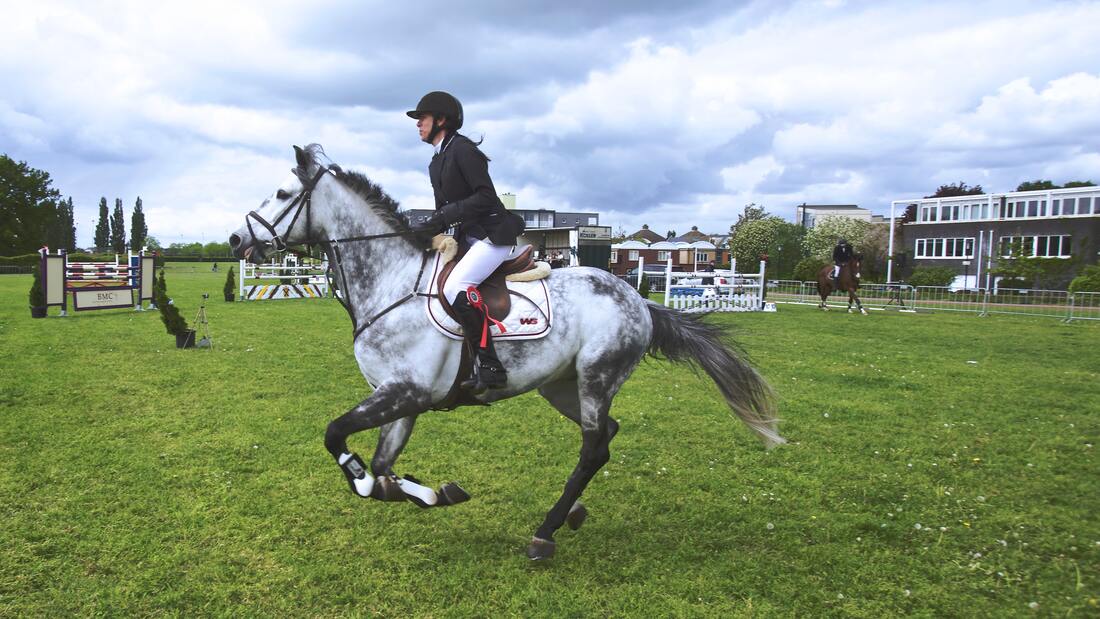 My interpretation of a hot seat is a rider who tends to influence horses in such a way, that quick, forward movement and somewhat erratic behaviour is seen as the norm, and is possibly encouraged.
In my discussions with riders who are aware of their tendency to have a hot seat, are willing to own that they love a horse to move forward positively and with energy. The want to horse to take them boldly forward and like a strong contact. They would prefer an overly forward horse, to a lesser moving and energetic one, even if that forward is seen as over the top, dangerous or difficult to ride. There are two ways I like to look at what has created the hot seat in the first place; 1. The physical tendency of a rider to use their aids quickly, sharply and with an expectation of the horse to react immediately 2. The emotional response of the rider where there is a positive gain from being seen to sit on a horse that is difficult to ride, or strong. "A rider who believes they have a hot seat will always have a hot seat until they decide that another way of asking for a horse to go is preferable. But once the rider decides they no longer want to have a hot seat, it can be changed instantly" The rider will only be able to physically change how he uses his body, when he consciously changes what his outcomes are. When a rider stacks more pain to the hot seat, and more pleasure to a calm, secure and centred seat, the unconscious brain will start to learn the strategies to move the rider towards the calmer seat. You see our brain can only take on approx 7 chunks of information at any one given time, but we are bombarded with millions of pieces of information coming at us. What 7 chunks we pay attention to and notice from all those millions of chunks are those which our brain has been conditioned to think is most important. It will quite literally delete a whole bunch of stuff, which never gets to our awareness simply because it has been told not to notice them as they are not important. Nuts huh! Up to now, the unconscious brain was only taking in information telling the rider that he needed to be stronger and more dominant. It then deleted the times when the horse showed signs of wanting to relax and settle. The unconscious part of the brain simply didn't let those signs through, so the rider didn't notice the opportunity offered by the horse. The unconscious brain thought it was not important enough to show you. If you were to look around your room now for 15 seconds and look at all the things in there that are brown. Now shut your eyes.....and say all the things you noticed that were green. Your brain would say Huh...you only told me to notice the brown, I couldn't take all of it in. You said to only pay attention to the brown. And that my friends is how the Reticular Activation System works. It's is what helps us learn, and kept us alive as a species for thousands of years. It's really useful most of the time, unless we are telling it to focus on the wrong things. Let’s look at how having a hot seat could have been encouraged to begin with. Let’s say a rider who has moved on from the beginner horse to a more advanced mount, perhaps that horse showed some signs of being difficult to ride. If a young rider is acknowledged positively for managing a difficult horse while they were younger, they may associate riding a difficult horse with positive emotions. Therefore they may encourage difficult behaviour to create ……. amongst their family or peers a sense of ability or talent. I know many riders who continually have difficult horses that “play up” in the show ring or buck. But, when you look closely, that behaviour is encouraged. The riders have no idea they are doing it, it is simply a learned response from patterns gone by that have created positive reinforcement to the difficuilt horse. The unconscious thoughts are so subtle, they don't ever register, but to the horse, the aids are not. In order to change the behavior, we first must look at what created the thinking in the first place. "If the rider genuinely wants to change, they will need to be willing to look inside of themselves for answers" They will need to decide whole heartedly that encouraging a new way of going for the horse is both beneficial and possible. Until the rider is willing to look at whether that behaviour in their horse is working towards the goals they want, they may never find the success they are craving. When the rider decides to focus on and notice new patterns in the horse, and genuinely see them as important, the unconscious brain will show you those moments that you would have otherwise missed, then the body will follow instantaneously to accomodate a new way of going. Here are few questions to ask your self to experiment with this concept What patterns do you notice that seem to be a consistent frustration in your life? What things are being show to you on a consistent basis? What reward or gain may you have experienced in the past from that action? Why do you no longer want to experience that action? How would you prefer it to be? Why do you want to change? What do you need to notice more of to get closer to what it is you want to experience? Then allow you subconscious to show what you have been missing out on. If you would like to delve a little deeper and work with me personally on a current frustration then get in touch. Have fun, Annyka xx I was talking with my personal coach yesterday. We've been working on some big business goals I have this year, and was feeling a little deflated in that I hadn't progressed as much as I would have like to by now.
Annie (my personal coach) mentioned that it might be a good time to look at where I have come and what were my goals back in early November. Well, to be honest it gave me a it of a shock. Things that were a problem back then wern't even on my radar anymore. I had moved so far past them that I forgot I had even had them in the first place. WOW, wasn't that an eye opener. What I thought was an issue now, would have been seen as unobtainable or not even possible in November. Had I seen my problems now, back in November I would have seen them has huge successes...nuts! We also looked at my many of my business goals, and what I found that as the business had grown, so had my problems, but in a good way. It wasn't that I didn't have problems, it was that they were much better quality problems, ones that I could solve, and ones that could only have come about by growing to where I was. She reminded me that we will always have something to solve, something to strive for but in order to grow we need to come up against obstacles, it is necessary to have them otherwise I would just stay where I was in a kind of unsettling comfort. I realised how much I have come in being aware of my thoughts, and how the tiniest what seems like the quietest thought will always affect my actions. The biggest thing I now practice and am so grateful to have learnt is the ability to be able to choose what thoughts I will give power to through awareness, and what ones I let slide by and move on into the great never never without me giving them the attention they were craving. Through consciously choosing which thoughts are ultimately serving me, and what thoughts I need to have, to be the person I need to be, to change my outside world, I am able to change how I feel about almost every situation and what action I will take. It is like I am finally learning how to create the world I want to live in as opposed to trying to manage a world I have no control over. Do I get it get it right every time? Hell NO, but even having awareness around when I don't get it right and being OK with that is a HUGE step. Overall, the biggest takeaway from the last three months of working with my coach, is that in order to grow your outside world, you must first grow your internal world. What successes I achieve are only based on my internal self, and how I choose to respond to almost every situation, both internally and externally. I have the power to choose each and every action I take, and then own those actions. I don't know anyone who "has it alltogether". In fact the most successful people I have met are constantly working through struggles, pressure and stress to ultimately grow there ability to handle more struggle, pressure and stress. That doesn't mean they are not happy, in fact they are crazy happy because they are so aware that have chosen this path, and knowing that you are choosing to lean into fear, means that you are choosing to lean into success as well. They are grateful for the stress, it means success to them. They are simply really good at managing it. Not through hiding it, numbing it or ignoring it but bringing awareness to it and being grateful for it. What a wonderful place to be... Until next time xxx  Motivation is great. We all want more of it. We want to feel as though something bigger than ourselves is driving us to do things that we feel we wouldn’t otherwise be able to do. Motivation has it’s purpose but when it comes to long term and challenging goals. It simply isn’t enough to get us all the way. Motivation will get us off the couch, and put the running shoes on. It will boost your energy levels and encourage you to do something different to begin with. But it is not there when you didn’t get much sleep the night before and your into your 8th day of fitness and you are simply just too tired. It’s not there when you are emotionally upset and feeling deflated, and it definitely ain’t there when things aren’t going to plan. This is where you need to have developed rituals. Rituals are something that happens every day, IRRELEVANT to how you are feeling about it. Having good rituals takes practice, we need to develop this muscle. When we do an action, or feel a certain way on a consistent basis, our brain makes things easier for us by connecting neurons together so that pathways becomes easier to do repetitively. That is why change is initially difficult as our lower sub conscious brain is telling us that we are doing this wrong and can we please go back to how we have always done things in the past, as that is where our brain is comfortable. In order to change we need to go through a period of discomfort or unease. If we didn’t we would never change or grow. Motivation will help get us through the initial phase. It can help to give our minds another place to go when it is screaming at us that what we are trying to do is stupid, wrong and you really don’t know what you are talking about. Who are you to …. blah blah blah. You know the kind of stuff I’m talking about. Your lower brain is scared - It hates change. It wants to keep to safe in a little ball of cotton wool and keep things simple. It doesn’t tell us that outright. It simply puts sneaky little nasty thoughts into our heads to encourage us to make choices that it thinks is right for us to keep us safe. That is where we get to use more of our conscious brain, and become aware of those nasty little thoughts and choose not to give them any power by listening to them. We can choose to think about something different, we can think about what our motivation is to change, whether it be intrinsically or extrinsically derived. Then we need to implement rituals. Start small. Make a small commitment you can do every day. Make it so simple, and easy to do that you pretty much can’t not do it. You see often we have a belief that we can’t, don’t or never stick to our commitments. While ever we hold that belief we are never going to achieve all that we want in life. Nothing is ever achieved without consistent action taken, towards is attainment. It is not the BIG action that is needed - It is consistency. It is the everyday mundane, incremental shifts that will ultimately move the needle. So start small, develop a ritual that use can then leverage on. You can say to your self “I committed to X everyday, and have followed through so I now know that I can commit to y ”. You will then develop another slightly bigger ritual, and you will feed of that, to then implement a ritual that will really start to make some changes. Once you see that feel the changes, you will then find it easier to stick to your rituals. But there are a few things to keep in mind here; 1. Don’t let those sneaky little thoughts enter you head. I found when I first started going to the gym at 5.30am it was easy for the first week as I was “motivated” but then as time went on and my muscles started to ache, I found myself having conversations in my head when my alarm went off. Sneaky little thoughts stated telling me - Oh, your riding another horse today so that can be your fitness, or Nic isn’t going to be there so no one will notice that I’m not there” and so on and so on. What I had to do is as soon as the alarm went off - Get up. Get up quick before the sneaky little thoughts had a chance to open their mouths. I had my clothes beside my bed so I virtually fell into them. Once I was up there was no problem getting to the gym. Those sneaky little thoughts never had a chance 2. Stick to the small ritual you initially started. There will be a time when things happen and you notice you haven’t been sticking to your big ritual. At that point it can be easy to quit, and make up some sort of excuse as to why it wasn’t for you in the first place. We usually then start getting frustrated and berating ourselves. “You idiot, you knew you could never do it. Oh look, you’ve given up again……” Listening to those thoughts are only going to move us away from our goals, so if you slip up, don’t worry. Be kind to yourself. Think, it’s OK. I am still doing X, I haven’t quit. By sticking to the one simple ritual, you are still in the game. It is easier to make a tackle when you still have your footy boots on! 3. Notice if you start to miss the small ritual as that’s where things start to unravel. This one is a big one for me personally. I have a series of rituals that I do everyday. I had noticed on reflection that whenever I slipped up on my big ritual, I had always slipped up on my little one first. Usually a couple of days before I gave up on the big one. Now I am aware of this, I notice when the little one get’s shaky, and I make darn sure that I continue to do that little one no matter what. When I do that I am able to get through the tricky few days where I may have been more emotional, or life was busy or whatever and continue to do my little ritual. In doing that my big ones hold fast too. 4. Don’t let emotions have a say in your rituals. These rituals need to be done on days when you are happy, days when you feel like everyone is against you, days when you feel useless, days when you are crazy busy, or days when you can’t be bothered and would rather be doing something else. Rituals don't care. I don’t care how you feel. You do them anyway. HOW YOU FEEL ABOUT DOING YOUR RITUAL DOESN’T MATTER. YOU JUST DO THEM. END OF STORY So if you have a big goal - Bloody Fantastic! Set yourselves 3 rituals today. One that you will begin today. Make it easy. Ensure it is something you are willing to commit to. Another that that is uncomfortable, but is achievable and has short term gains. Lastly, one that makes you feel a little uneasy about doing it, but that you know will ultimately move the needle towards where you are heading and give you long term results. Start with the first, and when you trust yourself in sticking to your commitments, implement the other two. How long this takes is different for everyone. Some will be onto all 3 in three days, others might take three weeks. How ever long it takes for you is perfectly fine. You know you are well on your way, when these rituals become so sub conscious that you find yourself doing them without even thinking about it. You have connected neurons together in such a way that they fire together effortlessly. There are no nasty little conversations going on in your head, as they know there is no point speaking up, they won’t be heard anyway. Let me know what your rituals are and how you go with this. If you would like a hand or talk this concept through more, get in touch. I’m always around and happy to help in anyway I can. Annyka xxx  It doesn't matter what we are moving towards. Whether it is something we are wanting to achieve, something we are wanting to change or something we want. In order to achieve it, we need to be taking some sort of action towards that outcome. This is no surprise to anyone. We have all heard that we need to be take things one step at a time, but in my and many of my clients experiences it is not quite a simple as that. I know from my own personal journey, sometimes I felt like I was striding forth, sword in hand, arm outstretched ready to take the castle, and next thing I knew it I felt like I was curled up an a metaphorical foetal position in the lounge room floor ( Yes, I actually remember a time where in my mind I could see my self on the floor feeling completely and utterly exhausted) I remember thinking this is all too hard, I should just quit trying. And then I looked at what quitting was, what was involved and what my life would look like if I did. It didn’t look good - In fact it looked so shitty that I realised there was no quit, it was no longer an option. That one thought gave me strength. I no longer questioned whether I could achieve my goal. There was no question, no fork in the road, only a bumpy, windy, corrugated surface filled with bull dust and the occasional road kill. So from my metaphorical lounge room floor, I lifted my head, propped one elbow under my shoulder and dragged my sorry arse forward and inch. I rested, and did it again. Then I was able to get a knee under me and stand before taking a wobbly shuffle forward. You see - this wonderful journey called life isn’t one big freeway heading towards shiny things and swimming pools. It’s definitely not all down hill and the wind is not always behind us, but that is a good thing! If we didn’t need to stop and fix and flat tyre we would have missed the koala in the trees, and if we didn’t get bogged in the bull dust we would not have met the person who could go on to become a great friend, mentor or teacher. It’s funny - We have the mentality that in order to succeed, we must to be moving ahead at the same speed or faster than everyone else and with huge amounts of motivation and gusto, then everything will fall onto place. The problem with that is it can all look so big and unachievable, and if we are not willing to see the journey or the process as the outcome it is easy to get disheartened and not try at all. Quitting then, isn’t a problem, because you won’t even start! Moving towards our goals simply means we are doing a little bit every day, even if it is tiny. Even if it is crawling on your hands and knees, because crawling will build momentum. Crawling leads to walking, walking will get you to the metaphorical gym, which will develop your mental, physical and emotional strength and fitness. Knowing that when you get knocked down it won’t bother you is a super strong strength to develop! It will mean the hard, scary stuff won’t be so scary anymore because you know you can still crawl forward if you fall! You will know that no matter what, you can still lift your head, get an elbow under your shoulder, drag a knee up and place your foot flat on the floor and rise again. Knowing that in you gut is all you need. There you will find that because you are no longer afraid of the fall - the fear or the judgement, it won’t bother you anymore leaving you to hold steady in the wind and jump the potholes in the road. The road won’t feel so bumpy, you will build shock absorbers and get better tyres. So from an equestrian perspective, no matter your goal - Keep moving forwards from wherever you land. Not everything will go to plan all of the time. Sometimes you will have ground rounds, jump superbly and move up a level, but it is also going to go to shit at some point. Maybe for only a short time, maybe it will feel like forever but when it does, and it will - It’s OK. The difference between those who will eventually succeed at achieving their goals, is between those who are willing to dare to fail, and those who won’t. Those who get up and those who don’t. You will succeed when you know you can handle whatever happens Annyka xxx P.s If there is something in your life that you would like to move towards and change, but find yourself stuck, then let me know. Together we can get you on your own bumpy road to Success To book in your personal FREE coaching session check out https://www.chameleoncoaching.com.au/your-success.html Well it certainly has been quite some time since I last wrote anything in the Blog section.
I have spent the last 12 months making sure that I am walking my own walk, as well as talking the talk in regards to my own choices, behaviours and direction in life. I wanted to know that I could have conversations with people who are looking to achieve much more than they currently are from an experiential place where I have made the mistakes and done the tough miles to get to where I am now . I needed to take this journey so I could help to show the way so much clearer for my clients. I needed to understand the process intuitively so I can be more compassionate and understanding. When I look back at my last Blog which was in June 2018, my first thought is what have I achieved since then, was it all worth it. Thankfully, all I can say is YES! Yes, Yes, Yes. This journey has been so worth it, and it is still continuing. I hope it will forever continue. I wan't to know that I am continually growing and improving myself. That will mean more challenges and getting out of my comfort zone, getting out of my own way, but I have done that enough in the last 2 years to know in my gut that on the other side of every challenge is a reward far greater than I could have expected. I am no longer afraid of the challenge. I am not afraid of rejection and not afraid of failure. What have I achieved since that last Blog? - Well, it all depends how you look at it. I could say I have travelled to China coaching, represented my country as a coach, created a new online business, completed my course, facilitated and spoken at workshops/seminars/presentations, furthered my coaching qualifications, grown my coaching business and got back into starting young horses and riding competitively again but as far as I am concerned they are only symptoms, only feedback from what I have really achieved in the last 12 months. I have developed far better and more meaningful relationships, strengthened my emotional intelligence and resilience, taken my fitness and health to a whole new level, overcome addictions, developed partnerships with people who challenge and inspire me, faced and dealt with difficult past experiences and found so much meaning to those experiences. I have forgiven and understood, learnt how to meditate and focus my mind towards a much clearer intention, know when and why I am procrastinating and how to move out of that into action, reignited my passion and rejuvinated my energy levels, found my sense of purpose and know my drivers that will help get me there, and am now on my way of becoming the best of who I can be. I have learnt I am enough - I am young enough I am old enough I am experienced enough I am brave enough I am loving enough I am smart enough I am good enough and I am tough enough I am worthy and I am grateful xx Facing the anxiety, bringing all those fears out into the light and owning them. Appreciating them and then using them as a tool to keep me moving forward. Understanding that they had no more power over me has been such a wonderful experience and I am so grateful of the awareness and emotional resilience I now have to be able to handle everything that comes my way. It may not get it right every time - and that is OK So now I am back - ready to serve. Ready to help others transform their lives. Ready to help you find the path that brings you more joy, more love and more success! You are sooo worth it! Let's do this xxx 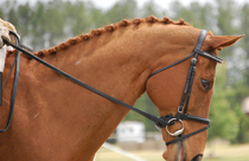 This is a fun way of looking at an “unsteady contact” from a different perspective.
There are times where riders have difficulty maintaining a steady contact with their horse. Often those riders also have unsteady hands to varying degrees, and tend to try and jiggle, or see saw the reins to get their horse “On the bit”. This is a different way of helping them see how they are influencing that contact. Are they corrupting or caressing it? Simply saying things like keep you hands quiet and still, is often not enough to create genuine change, as there needs to be a deeper understanding of the riders responsibility in producing the desired feel. It's a bit like the chicken and the egg analogy. We can't speak with the horse using words, and ask them to be quieter in the mouth, but we can encourage the rider to be the one to have ownership and take the first step towards helping the horse seek the contact, as the horse is looking to have a quiet, balanced conversation with the rider. By turning things around, and looking at the issue from how “we” are influencing the feel on the horses mouth is one of MANY steps to allowing the horse to relax into the contact and let their body loose. I like to think of the contact as feedback. It’s like a radio station. You are hearing through a set of speakers in the horses mouth. What you hear is directly related to what is happening in the horses whole body. If you imagine that we are wanting to hear classical music, but our hands are playing AC/DC then the rock music will be louder and we can’t hear the horses own music. For this exercise, I ask the rider to imagine their hands are now the horses mouth, and the horses mouth are now a riders hands. This can be incredibly tough for some to comprehend, and the rider will often need to be reminded that only the rider themselves can influence “the bit” (The one they are holding) To make this even more animated I often place a bit in the riders hands, and have them hold the rings of the bit with their thumbs as a reminder. I will mention things like “You are the bit. Only you can influence how the bit feels in your hands” You can then bring the riders awareness to what does the bit actually feel like in their hands? Is it steady, or is it moving around a lot? Remind them that however much the bit in their hands is moving, that much movement is also being transferred to the horses mouth, and how would that feel if the horses mouth were a set of hands. What word would you use to describe it? Ask the rider to take their awareness to the horses mouth, and ask themselves to be honest and describe how it feels to the riders hands at the horses mouth. What sort of music is he hearing? I tend to do this mostly in walk and trot, and aren’t too picky on where the rider goes. As long as the horse is not leaving the arena, or getting a bit quick I like to keep it simple. If the rider is more advanced in their training you can then start to incorporate smaller circles, transitions and even lateral work, but that is all up to where the coach see’s appropriate. Obviously, this discussion takes place whilst looking at the riders position, how the horse is working over his back, engaging his core and hind quarters, and allowing his body to be loose, so please keep in mind, this exercise is only part of solving the problem, and won’t solve the problem in itself, but is a great start. I know this all sounds confusing to begin with, but once you get your head around it, it is hugely enlightening. The best part is – once the rider takes some ownership of the contact, ensuring there are no blocks in their own body, and looks at it from a horses point of view, the horse completely relaxes and lets their body loose as they are no longer being corrupted. It is a hugely rewarding response. Have fun playing with this concept, and let me know how you go! |
AuthorAnnyka Overton Archives
September 2020
Categories |
 RSS Feed